Booking choice: The Los Amayas cave show, from $28 per person. Check dates Tour details
Plenty of people plan one Andalusian city and wonder whether they are choosing the right place to see flamenco. Short answer: you will see live flamenco in either. The real difference is the setting. Granada's signature is the zambra in a cave on the Sacromonte hill. Seville's is the tablao, the barrio of Triana and a big festival every other year.
Show details here come from the GetYourGuide listings on this site. Everything else is from sources named in plain text: UNESCO, Andalusia tourism (andalucia.org), Wikipedia, the UNESCO World Heritage Centre and El Debate for this year's Bienal. Train times change, so for those we point you to Renfe, Spain's rail operator.
The quick answer
See flamenco in Granada for a cave show in Sacromonte, where the zambra is performed with the Alhambra across the valley; Los Amayas seats up to 60 with no stage or microphones, from $28. See it in Seville for Triana, the tablaos and the Bienal festival. UNESCO calls Andalusia as a whole the heartland of flamenco, so neither city owns it.
Should I see flamenco in Granada or Seville?
See it wherever you are sleeping that night: both cities have plenty of shows. Choose Granada for a cave zambra in Sacromonte, Seville for its tablaos, Triana and the Bienal years.
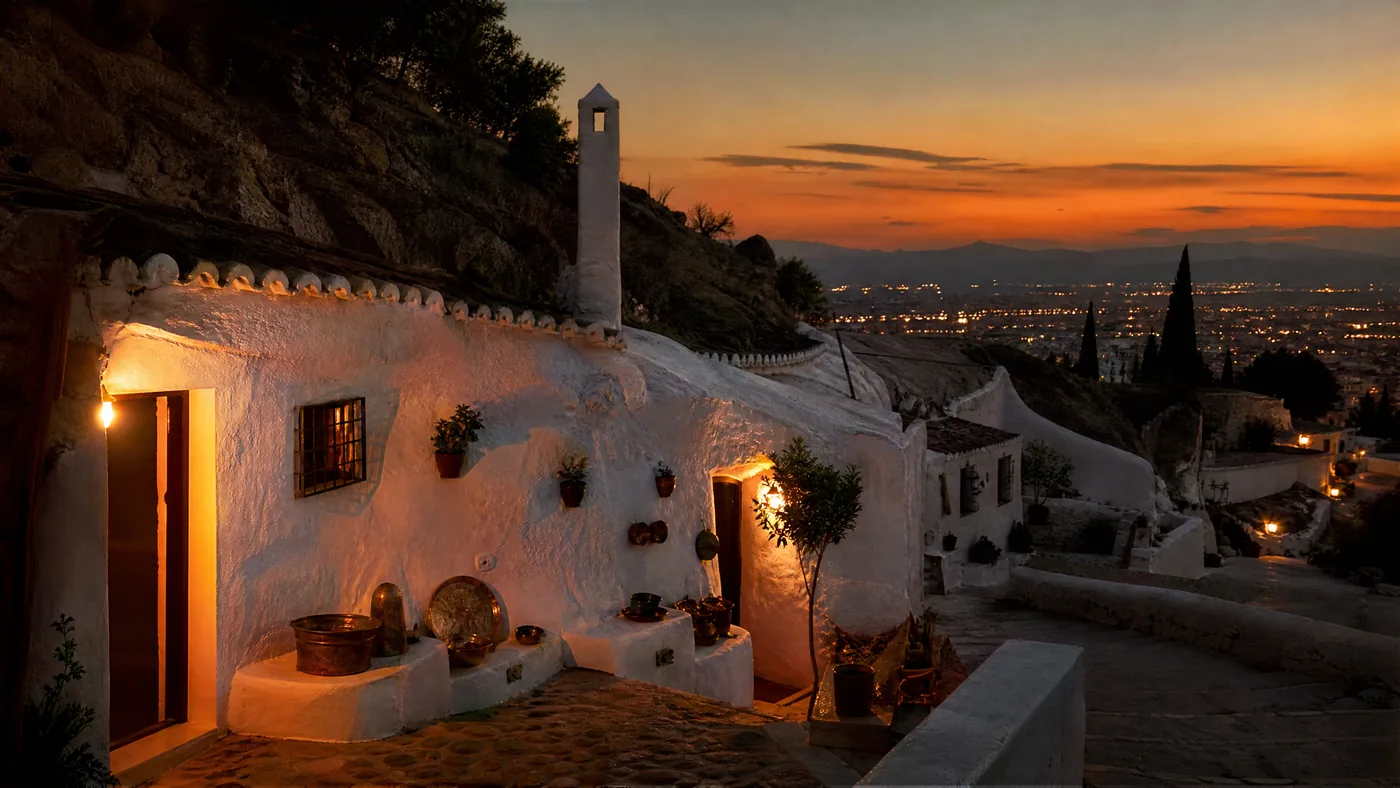
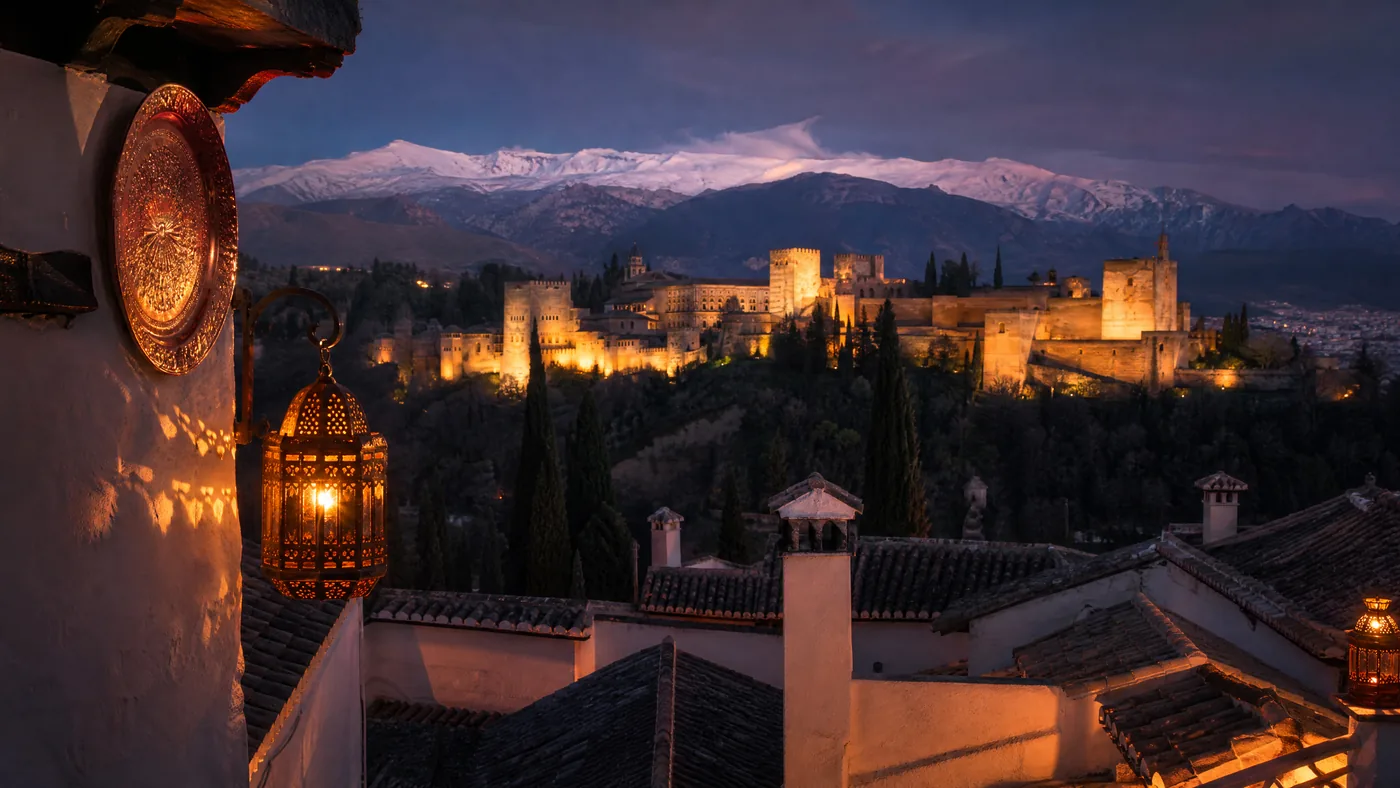
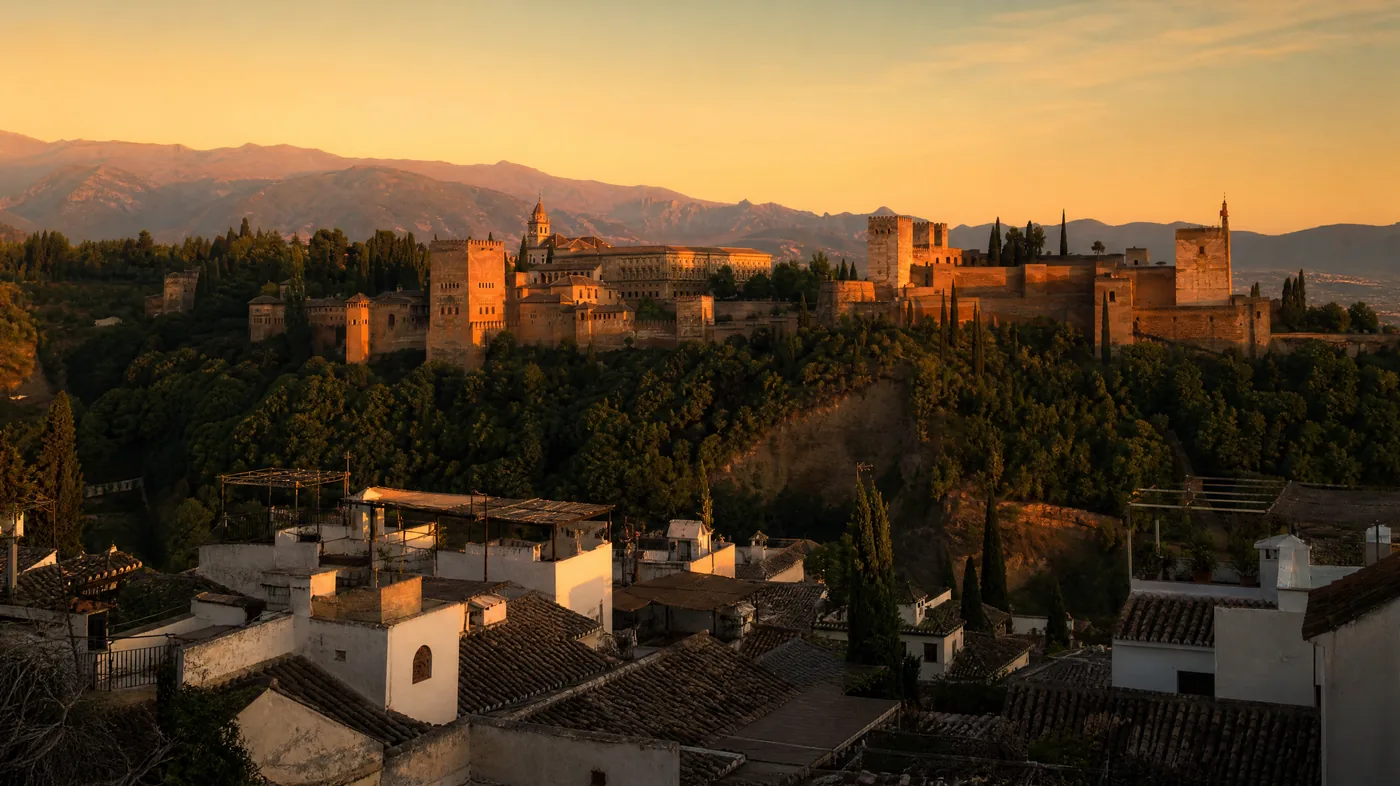
Reasons for Granada. The caves. Sacromonte's cave houses were dug into the hillside, probably from the 16th century, and no two are alike, per Wikipedia. The zambra became typical at weddings here and is now danced mostly for visitors in these caves. Add the views: Los Amayas looks across to the Generalife and the Alhambra, and Los Parrones is run by a flamenco family.
Reasons for Seville. Andalusia tourism calls Triana, across the river from the old town, one of the cradles of flamenco. Seville is where Silverio Franconetti opened the first café cantante, a flamenco singing café, in 1881, per Wikipedia. And in festival years the Bienal fills the city's stages for weeks.
If Granada is on your route, our advice is simple: book the cave here. It is the one setting you will not find in the same way elsewhere.
Is flamenco from Granada or Seville?
From neither alone. UNESCO calls Andalusia in southern Spain the heartland of flamenco, with roots in Murcia and Extremadura too.
UNESCO, which inscribed flamenco on its Representative List of the Intangible Cultural Heritage of Humanity in 2010, calls it the badge of identity of many communities, in particular the Gitano (Roma) community, which played an essential role in its development. Wikipedia's flamenco article sums up today's most accepted view as a union of two ideas: flamenco developed in Andalusia, and Andalusian Gitanos contributed decisively to it.
Both cities wrote chapters. Seville had the cafés cantantes from 1881, where singers turned professional. Granada hosted the Concurso de Cante Jondo, the flamenco singing contest that Manuel de Falla and Federico García Lorca organised on 13 and 14 June 1922 in the Plaza de los Aljibes of the Alhambra. Granada even lends its name to a palo, the granaína, as Málaga does to the malagueña.
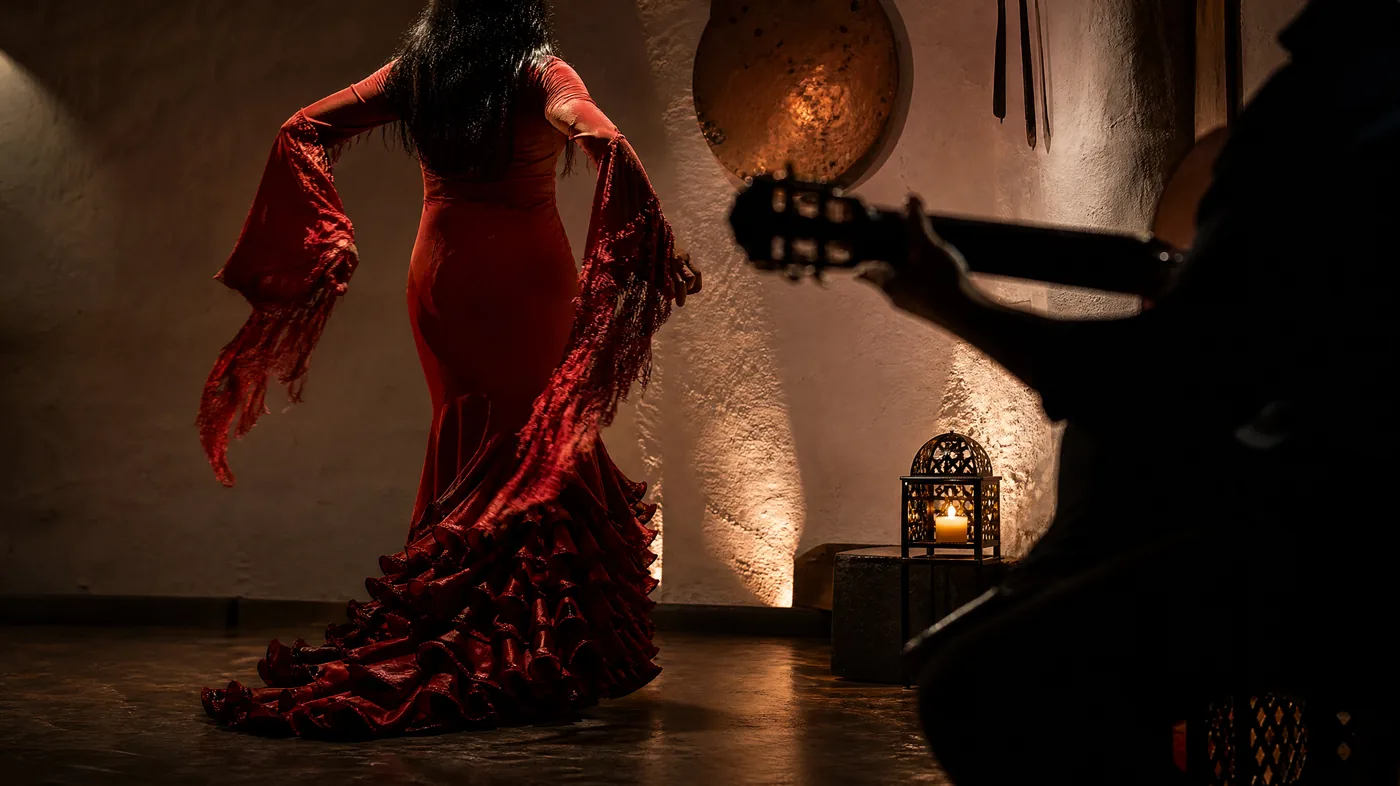
Zambra in Sensi Amaya's cave in Sacromonte: up to 60 guests and every night of the week.
Check dates for the Los Amayas cave showWhich city is best for flamenco, and what is the flamenco capital?
No official body names a flamenco capital. Seville, Jerez and Granada each have a strong claim, and UNESCO points to Andalusia as a whole.
The claims, with their sources:
- Seville: Triana, one of the cradles of flamenco per Andalusia tourism; the first café cantante in 1881; the Bienal de Flamenco.
- Jerez de la Frontera: home since 1958 of the first chair of flamencology, the oldest academic institution for flamenco, per Wikipedia.
- Granada: the Sacromonte zambra, the 1922 Concurso de Cante Jondo, and Peña La Platería, founded in 1949, which Andalusia tourism calls the doyenne of flamenco clubs in the city, Andalusia and Spain. Andalusia tourism also notes that most of the story of flamenco in Granada takes place in the city itself.
Which city suits you depends on what you want to see. For the cave houses and the zambra, Granada is the place. For the widest choice of stages in one city, Seville is hard to beat.
What makes flamenco in Granada different?
The zambra, Granada's own form, performed in the caves of Sacromonte, often without a stage or amplification. You sit along the cave walls with the artists a few steps away.
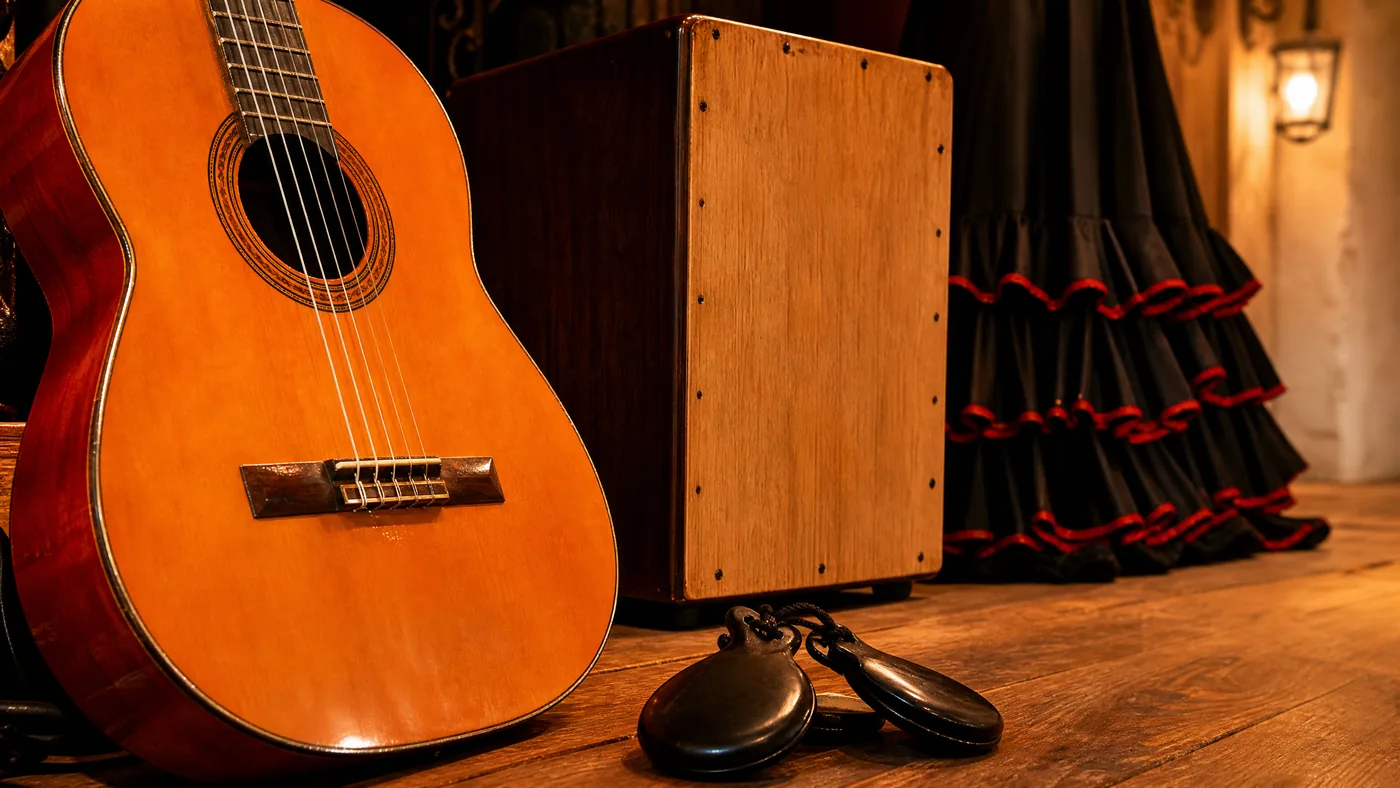
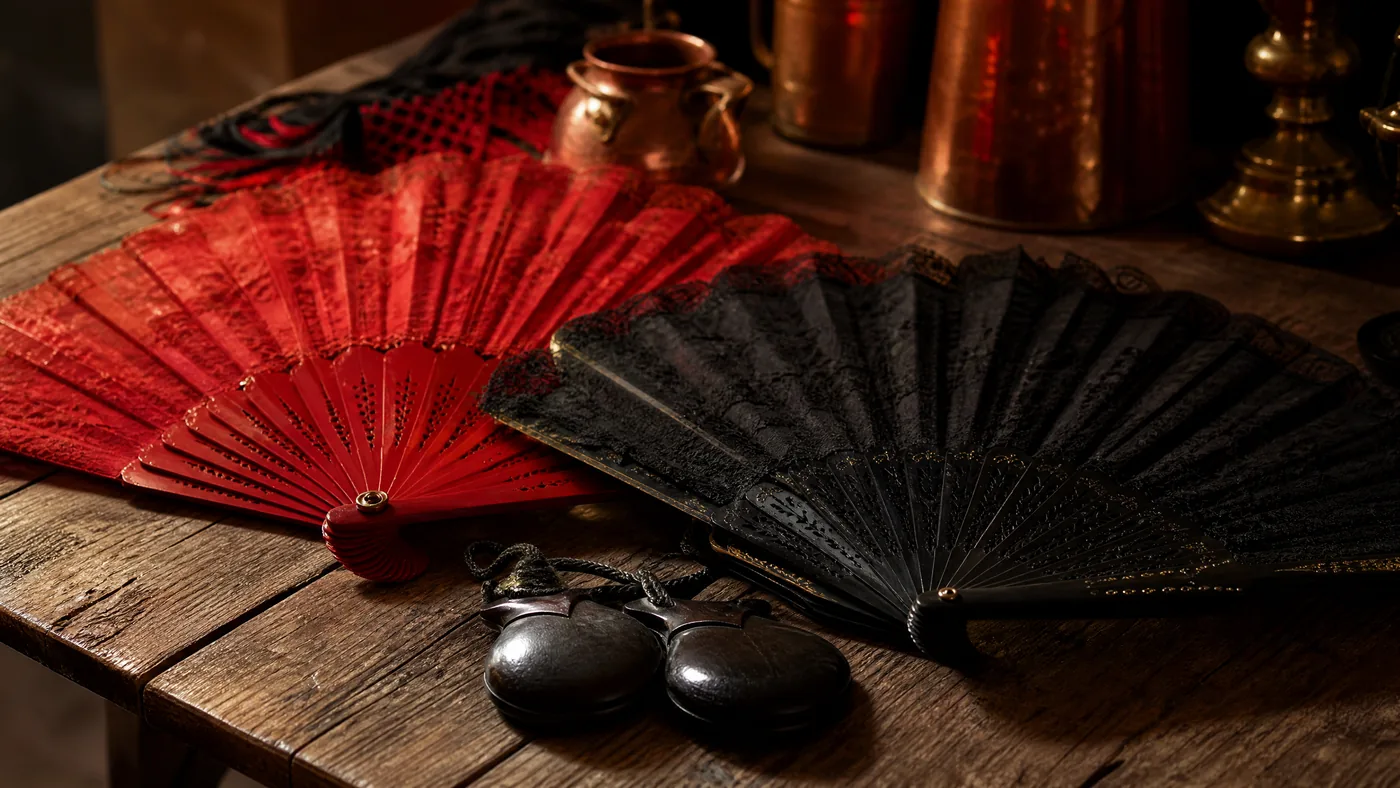
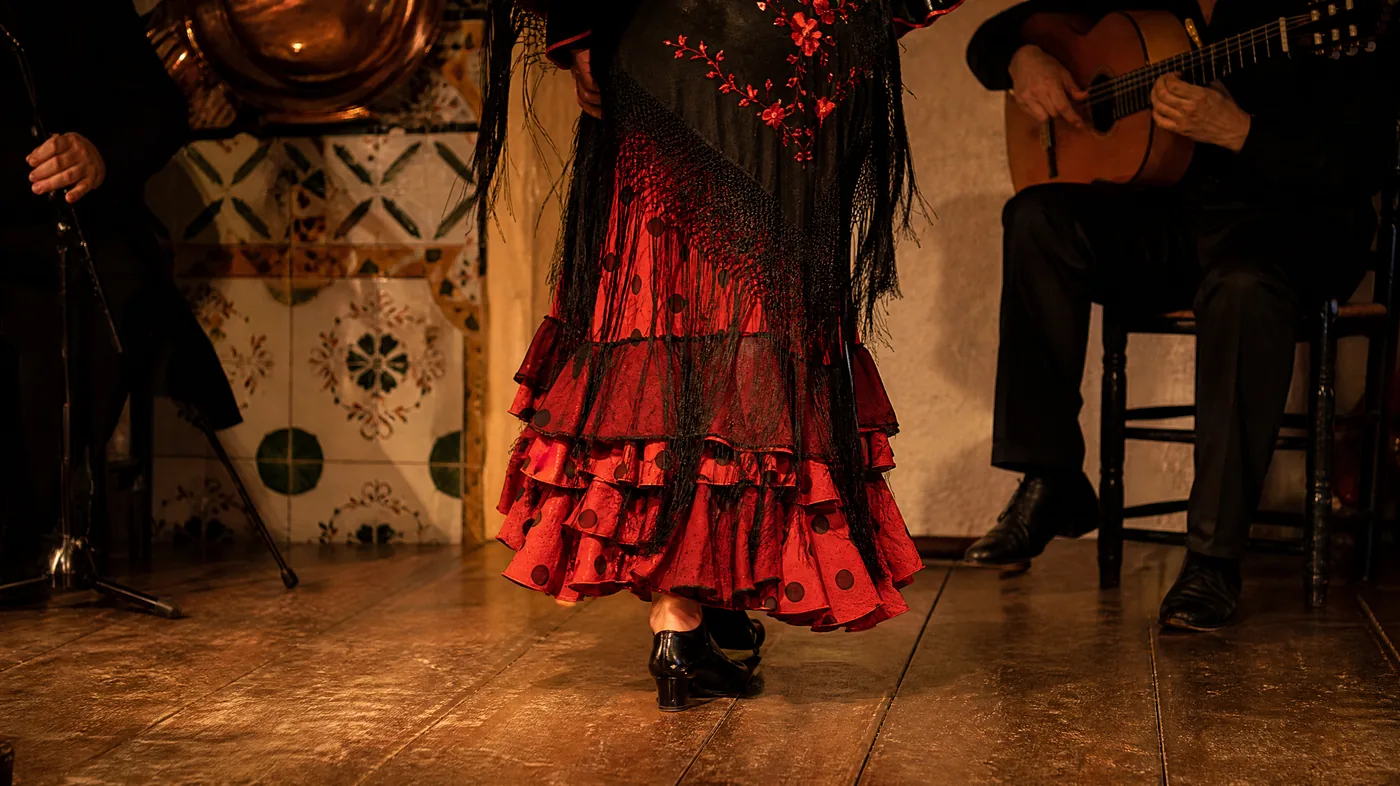
Wikipedia's article on the dance says it is danced today in the caves of Sacromonte and of Almería, and describes it as danced barefoot with finger cymbals, the skirt tight around the hips and flaring out into a ruffle. What you see in the caves today is a 1-hour show with guitar, song and dance in a whitewashed room.
Four caves on this site: Los Amayas (up to 60 guests, no stage or PA system), Cuevas Los Tarantos (since 1972, per the listing), Cueva La Faraona (25 seats) and Los Parrones. Melanie went to Los Parrones in Sep 2026: "This was a first time experience for me and it felt truly authentic. The singer, guitar player and the two flamenco dancers were all excellent and we had a wonderful evening".
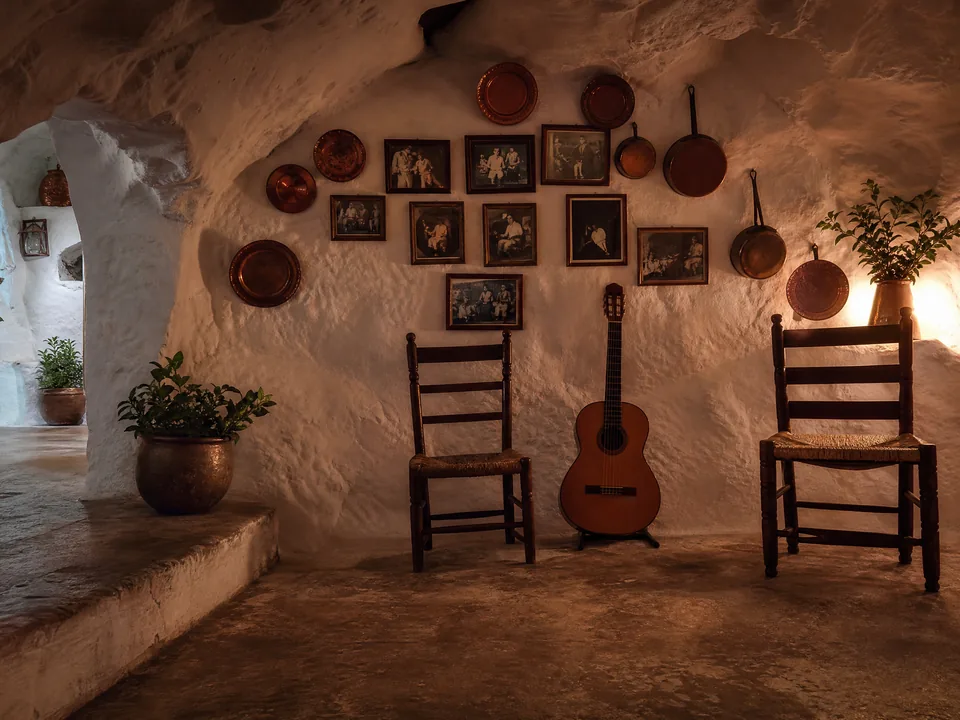
A Sacromonte cave run by the Los Parrones flamenco family: singing, dancing and guitar, with views of the Alhambra.
Explore Los Parrones Tour detailsGranada and Seville side by side: how do they compare for flamenco?
Granada leads on cave shows and views of the Alhambra; Seville on stages, history and a major festival. Both have shows every evening.
The two cities at a glance, from the sources named in this guide:
| Granada | Seville | |
|---|---|---|
| Signature setting | Cave houses of Sacromonte, where the zambra is performed | Tablaos, and the Triana quarter |
| Landmark moment | Concurso de Cante Jondo, Alhambra, June 1922 | First café cantante, Silverio Franconetti, 1881 |
| Festival | Shows all year | Bienal de Flamenco, every two years |
| World Heritage | Alhambra, Generalife and Albaicín | Cathedral, Alcázar and Archivo de Indias |
| Pick it for | A cave zambra a few steps from the artists | A wide choice of stages and the festival |
From $18 for a cave seat to $60 for dinner and a show, Granada's tickets are listed in the show comparison.
Granada, Seville, Málaga or Córdoba: which city should you visit?
Each has a reason. Granada has the Alhambra and the Albaicín, Seville its cathedral and Alcázar, Córdoba a long cante jondo tradition, and Málaga its own palo, the malagueña.
- Granada: the Alhambra, a UNESCO World Heritage Site since 1984, with the Albaicín added in 1994, plus Sacromonte's caves. See the Granada planning guide.
- Seville: the Cathedral, the Alcázar and the Archivo de Indias form one World Heritage property, per the UNESCO World Heritage Centre. Flamenco: Triana and the Bienal.
- Córdoba: the National Contest of Cante Jondo of Córdoba was first organised in 1956, per Wikipedia.
- Málaga: it gives its name to a palo, the malagueña, as Granada does to the granaína.
Is Granada nicer than Seville? That is taste. Granada is smaller and hillier, with the Sierra Nevada behind the Alhambra; Seville is flat, larger and on a river. We would not pick one over the other. Do both if you can, and see a show in each.
A theatre on Campo del Príncipe with a clear view from every seat, from Granada's tangos to the bulería.
Check dates for Teatro Flamenco GranadaIs Seville a day trip from Granada?
It can be, by train or bus, but it makes a long day. Flamenco shows run in the evening, so plan to sleep in the city where you see the show.
Renfe, Spain's rail operator, runs trains between Granada station and Sevilla-Santa Justa. Journey times and the number of trains change with the timetable, so check this season's times on renfe.com before you plan the day.
Our advice: give each city at least one night. A show starts in the evening and lasts about an hour, and after a cave show in Sacromonte you want to walk down past the lit Alhambra, not run for a last train. Staying in Granada? Book your show for the first or second night, then keep the other evening for the Albaicín viewpoints. Every show here cancels free up to 24 hours before if your plans move.
When is the best time to see flamenco in Granada and Seville?
Any evening of the year in Granada, where shows run nightly. In Seville, the Bienal years add a festival: the 2026 edition ran from 9 September to 3 October, per El Debate.
The Bienal de Flamenco de Sevilla is held every two years; El Debate reported that the 24th edition, in 2026, brought together more than a hundred voices. For the next edition, check the Bienal's official programme.
In Granada, no festival is needed. Los Amayas performs every night, Tablao Albayzín lists daily performances, and the caves and tablaos in the Sacromonte guide run all year. Winter nights are cold at the airport station, with an average minimum of about 0°C in January per AEMET, so bring a layer for the walk back down. Martin, after Los Amayas in Nov 2026: "Show was beyond our expectations and really atmospheric. Well worth the money and was a highlight of our trip".
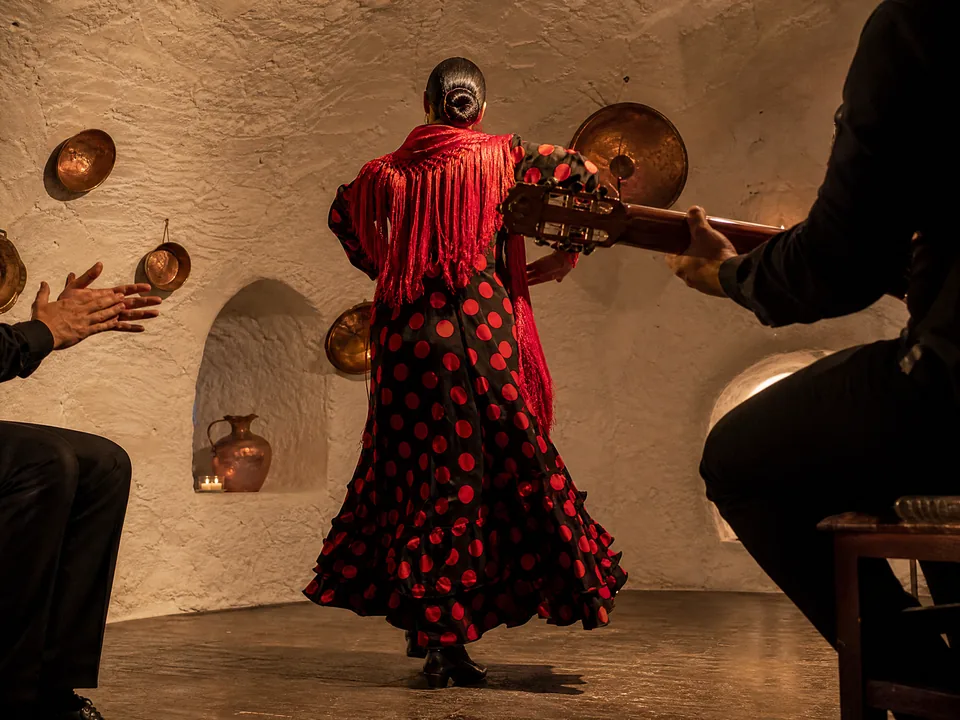
Every night in Sensi Amaya's cave: zambra for up to 60 guests, no stage, no microphones, and the Generalife across the valley.
Explore the Los Amayas cave show Tour detailsFrequently asked questions
Is flamenco from Granada or Seville?
From Andalusia as a whole. UNESCO calls Andalusia the heartland of flamenco, with roots in Murcia and Extremadura, and names the Gitano (Roma) community as essential to its development.
What is the zambra?
Granada's own form of flamenco. It became typical at weddings in Sacromonte and is now danced mostly for visitors in the cave houses there, per Wikipedia.
Is Seville a day trip from Granada?
It is possible by train, but it is a long day. Renfe runs trains between Granada and Sevilla-Santa Justa; check renfe.com for this season's times, and sleep where you see your evening show.
When is the Seville Bienal de Flamenco?
It is held every two years. The 2026 edition ran from 9 September to 3 October, per El Debate; check the Bienal's official programme for the next one.
Ready to book
Choose your show
Free cancellation up to 24 hours before on every option. Prices are from-prices in USD and move with the season.
Los Amayas Cave Flamenco Show in Sacromonte
- 1-hour zambra in a Sacromonte cave
- Up to 60 guests
- No stage or PA system
Flamenco Los Parrones at the Caves of Sacromonte
A flamenco family's own cave, with views of the Alhambra
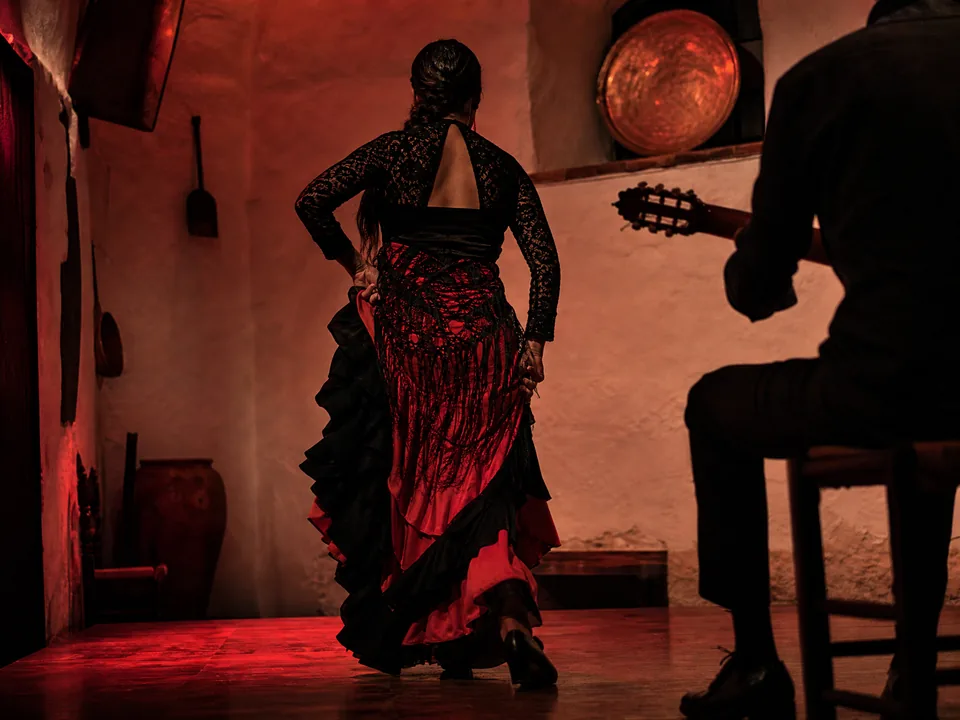
Flamenco Show at Tablao La Alboreá
- 1-hour flamenco show
- Reserved seating
- Wine and Iberian tapas (if option selected)