Booking choice: Jardines de Zoraya, from $21 per person. Check dates Tour details
The show starts quietly. The guitarist tests a few notes, the singer clears their throat, someone claps a slow rhythm. Then the voice breaks open and the room changes. You don't need to know any of the terms to feel it. Knowing a few makes the hour easier to follow, and makes the moment someone shouts "¡olé!" a lot less mysterious.
This guide works from the official description (UNESCO's) and from the standard references, and points to the shows in Granada where you'll see each part. Every show here runs about 1 hour.
The quick answer
Flamenco is song (cante), dance (baile) and guitar (toque), with hand-clapping and foot-stamping, in UNESCO's words, and UNESCO inscribed it as intangible heritage in 2010. Its styles are called palos, from the deep soleá to the fast bulería. Shouts like olé are jaleo, encouragement for the artists. Jardines de Zoraya in the Albaicín puts 2 dancers, 2 singers and a guitarist on stage, from $21.
What does flamenco mean?
It's the name of an art form of southern Spain, but the word's origin is debated. Historically "flamenco" was used in Spain for the Romani people (gitanos), and it was first applied to the music in an 1847 newspaper article, per Wikipedia.
The theories you'll come across:
- A name for the gitanos: the English traveller George Borrow, in Spain in the 1830s, said the gitanos were also called "flamenco", Spanish for Flemish.
- Flemish singers: another idea links the word to the Flemish singers brought to Spain by King Carlos I in 1516.
- An Arabic root: Blas Infante proposed a deformation of Arabic words for a runaway or wandering peasant. Wikipedia notes this theory is not widely accepted.
The art itself is older than the label. Wikipedia gives 1774 for the oldest record of flamenco music, in José Cadalso's Cartas marruecas. Today UNESCO defines it as "an artistic expression fusing song (cante), dance (baile) and musicianship (toque)", with Andalusia as its heartland and roots in Murcia and Extremadura too.
What are cante, baile and toque?
The three parts of flamenco: cante is the singing, baile the dance and toque the guitar. UNESCO adds castanets, hand-clapping and foot-stamping.
Each part, in UNESCO's description, with the Spanish names for the artists:
- Cante (the cantaor or cantaora): sung by men and women, preferably seated, with no backing singers. The lyrics are short and simple and carry grief, joy, tragedy, rejoicing and fear.
- Baile (the bailaor or bailaora): "a dance of passion, courtship". UNESCO notes the technique differs: heavier use of the feet for men, gentler movements for women.
- Toque (the tocaor): the guitar, which UNESCO says "has long surpassed its original role as accompaniment".
The dance draws the eye, but watch the three talk to each other. The dancer signals a change with a stamp, the guitar answers, the singer comes in. Most of it is not choreographed second by second. Wikipedia describes "flamenco puro" as built on signals and calls of structural improvisation.
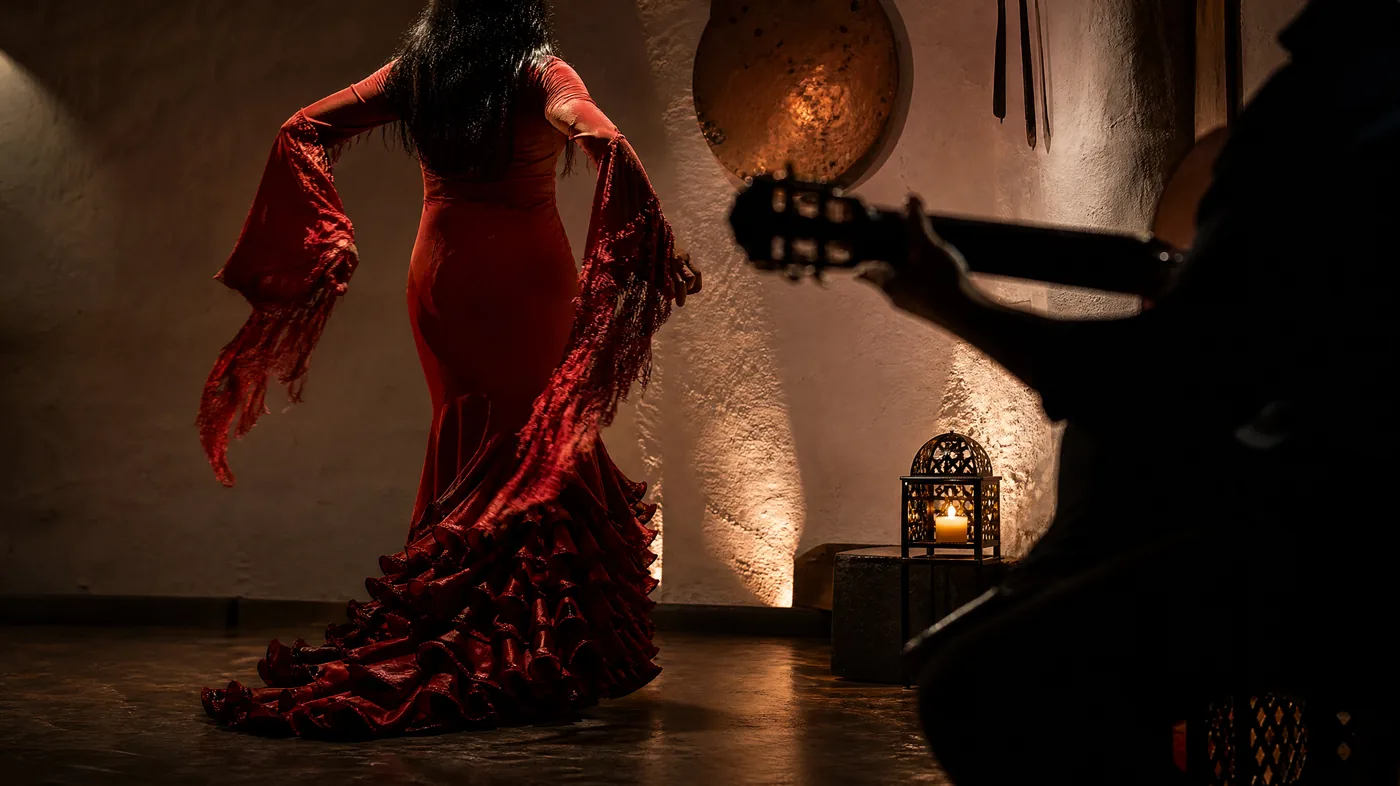
At Jardines de Zoraya the cast is 2 dancers, 2 singers and a guitarist, per the listing.
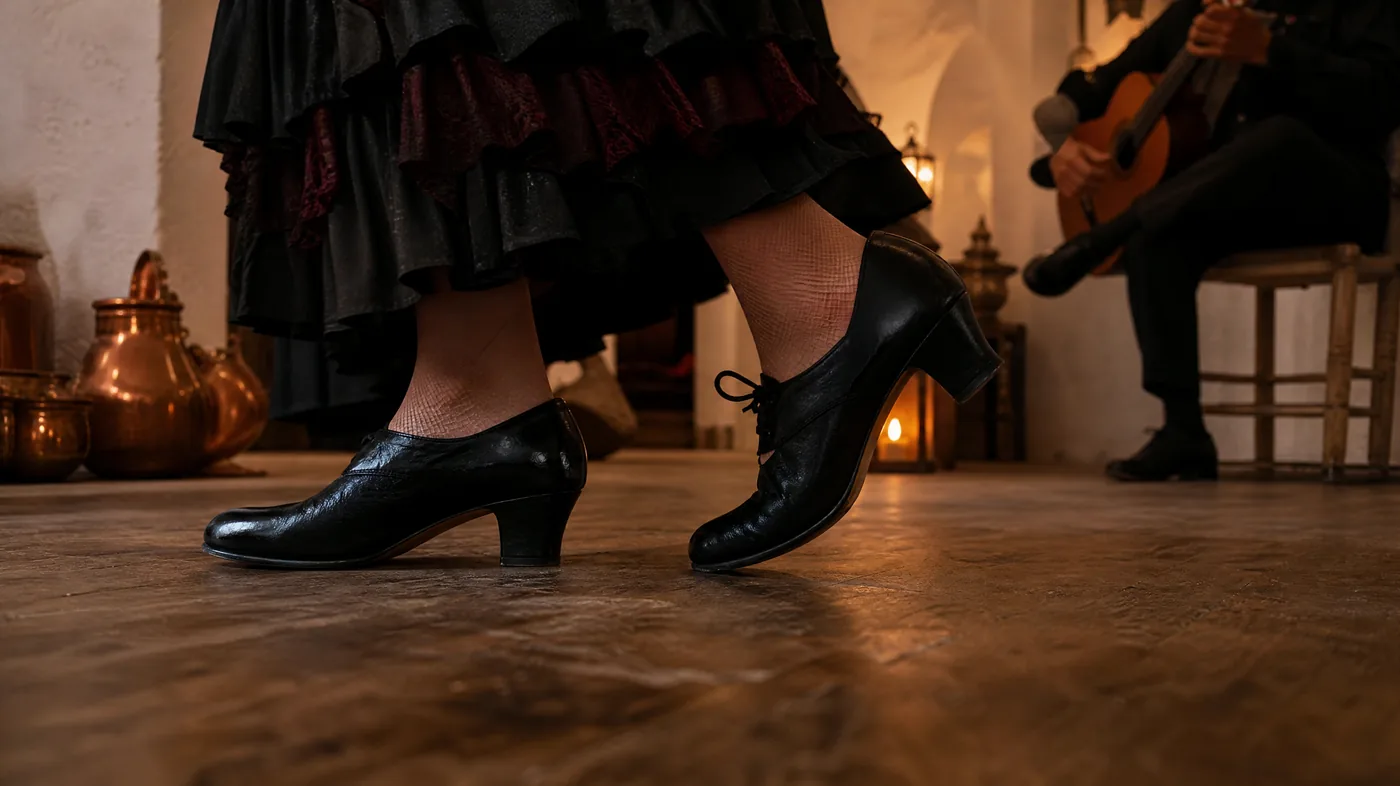
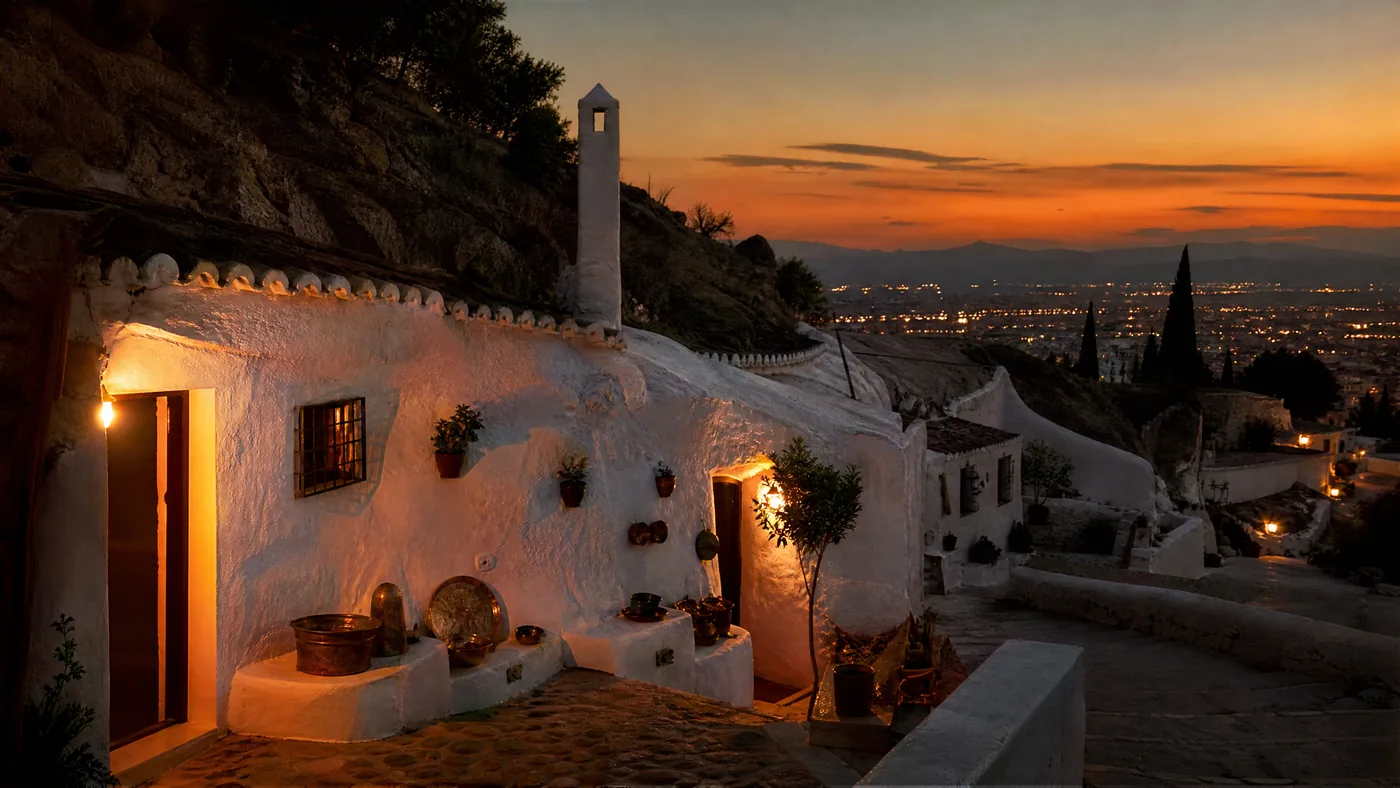
Two dancers, two singers and a guitarist in an Albaicín tablao, 2 minutes from the San Nicolás viewpoint.
Check dates for Jardines de ZorayaWhat are the palos of flamenco?
Palos are the styles of flamenco, told apart by rhythm, mode, chords, verse form and where they come from. Wikipedia counts over 50 of them, from the deep and serious cante jondo to the light cante chico.
Some are sung without a guitar, some are danced and some are not. The ones you are most likely to hear in a 1-hour show in Granada:
| Palo | Feel | Roots | Where it comes up here |
|---|---|---|---|
| Soleá | Slow, serious, the heart of the repertoire | Wikipedia traces it through Triana, Seville | Jardines de Zoraya, "the deep and soulful soleá" per the listing |
| Alegrías | Bright and festive | Cádiz, probably from the Aragonese jota | Jardines de Zoraya, "the joyful and lively alegría" |
| Tangos | Steady, danceable | One of the main families of palos | Teatro Flamenco Granada, "the traditional tangos of Granada" |
| Bulería | Fast, 12-beat cycle | The Calé Romani of Jerez, 19th century | Teatro Flamenco Granada, "the power of the bulería" |
| Granaína | Free rhythm, ornate | A fandango-derived cante named after Granada | Ask the artists: not every show sings it |
| Zambra | Celebratory, wedding roots | The Romani of Granada and Almería | The Sacromonte caves |
Wikipedia calls the bulería the emblematic palo of flamenco: it often ends a gathering, with vigorous dancing. Chen, at Jardines de Zoraya, put the range of one evening simply: "The first half is original Flamenco, you can feel the anger and sorrow from the singing and dancing." (Oct 2026)
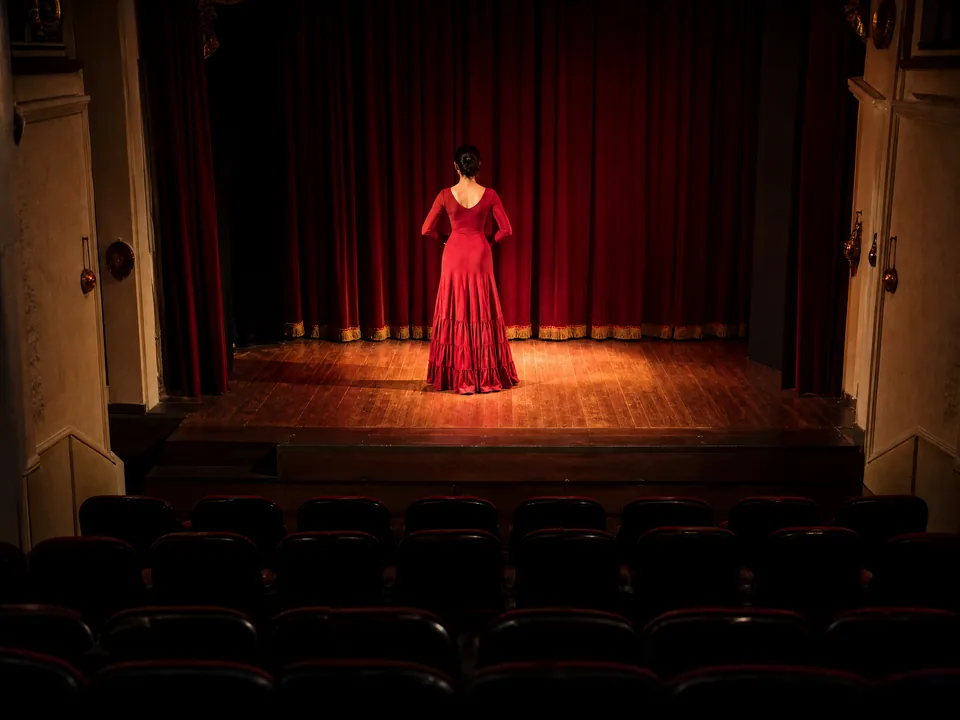
A theatre on Campo del Príncipe with a view from every seat, and an hour that runs from Granada's tangos to the bulería.
Explore Teatro Flamenco Granada Tour detailsWhat do people shout during flamenco?
Calls of encouragement known as jaleo. Wikipedia names olé and "así se canta" or "así se baila" (that's how to sing, that's how to dance) as common examples.
Jaleo is rhythmic hand-clapping plus vocal calls that encourage and support the performers, per Wikipedia. What you may hear:
- ¡Olé!: the classic, called out after a passage that lands. Its origin is debated; one theory in Wikipedia's flamenco article points to the Caló word "olá", meaning "come".
- ¡Así se canta! ¡Así se baila!: that's how it's sung, that's how it's danced.
- ¡Arza!: Wikipedia lists it with olé as a call used to cheer the artists on.
- Palmas: the hand-clapping itself. When there is no guitar, Wikipedia notes, the rhythm is carried by palmas or by knuckles on a table.
As a guest, keep it simple. Let the artists and the palmeros set the rhythm: off-beat clapping from the seats throws it. A heartfelt olé at the end of a passage is fine. Some venues ask for quiet: Jardines de Zoraya's listing requests silence during the performance, and allows photos without flash.
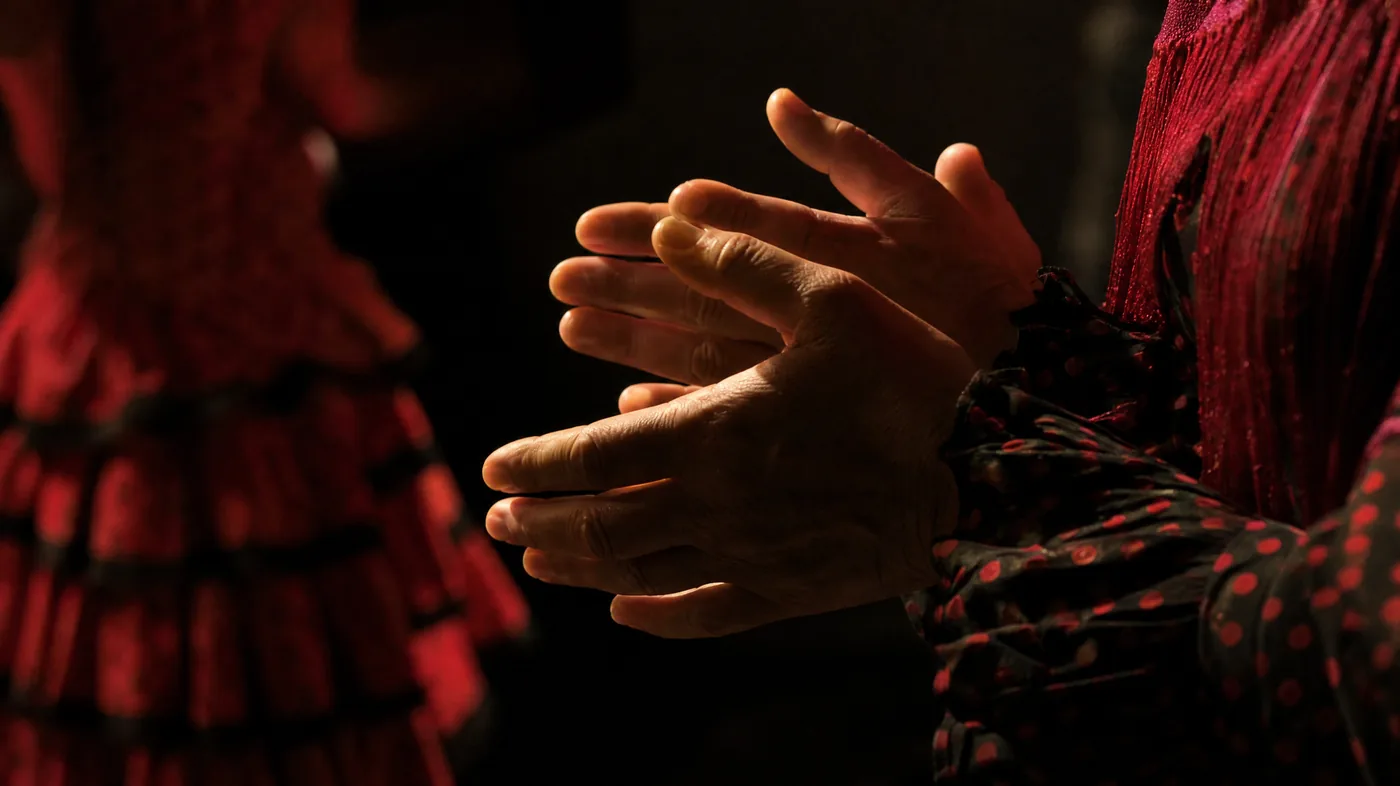
What is duende in flamenco?
A heightened state of emotion and expression that a performer, and the room with them, can reach. Federico García Lorca first set out the idea in a lecture in Buenos Aires in 1933, "Juego y teoría del duende" (Play and Theory of the Duende).
Lorca, the poet of Granada, put it like this in that lecture: "The duende, then, is a power, not a work. It is a struggle, not a thought." He quoted the singer Manuel Torre: "everything that has black sounds in it, has duende." For Lorca, duende was something other than style, technique or charm. It takes hold of the performer and the audience at once.
You can't book it. Some nights the singer finds it in the second song, some nights it never quite comes. Guests notice when it does. Graham, at Teatro Flamenco Granada: "The performers were fantastic and nicely developed their duende." (Oct 2026)
Lorca's link to flamenco goes beyond the lecture. In June 1922, with the composer Manuel de Falla, he organised the Concurso de Cante Jondo in Granada, a flamenco singing contest held on 13 and 14 June in the Plaza de los Aljibes of the Alhambra. The prize money went to amateurs. A 72-year-old singer, Diego Bermúdez "El Tenazas", walked about 100 km from Puente Genil and became the surprise star of the contest. A 12-year-old, Manolo Ortega, later known as El Caracol, also took a first prize for song.
Theatre seats with a clear view of the stage, from Promo tickets to VIP with a meet-and-greet after the show.
Check dates for Teatro Flamenco GranadaWhat is the most important instrument in flamenco?
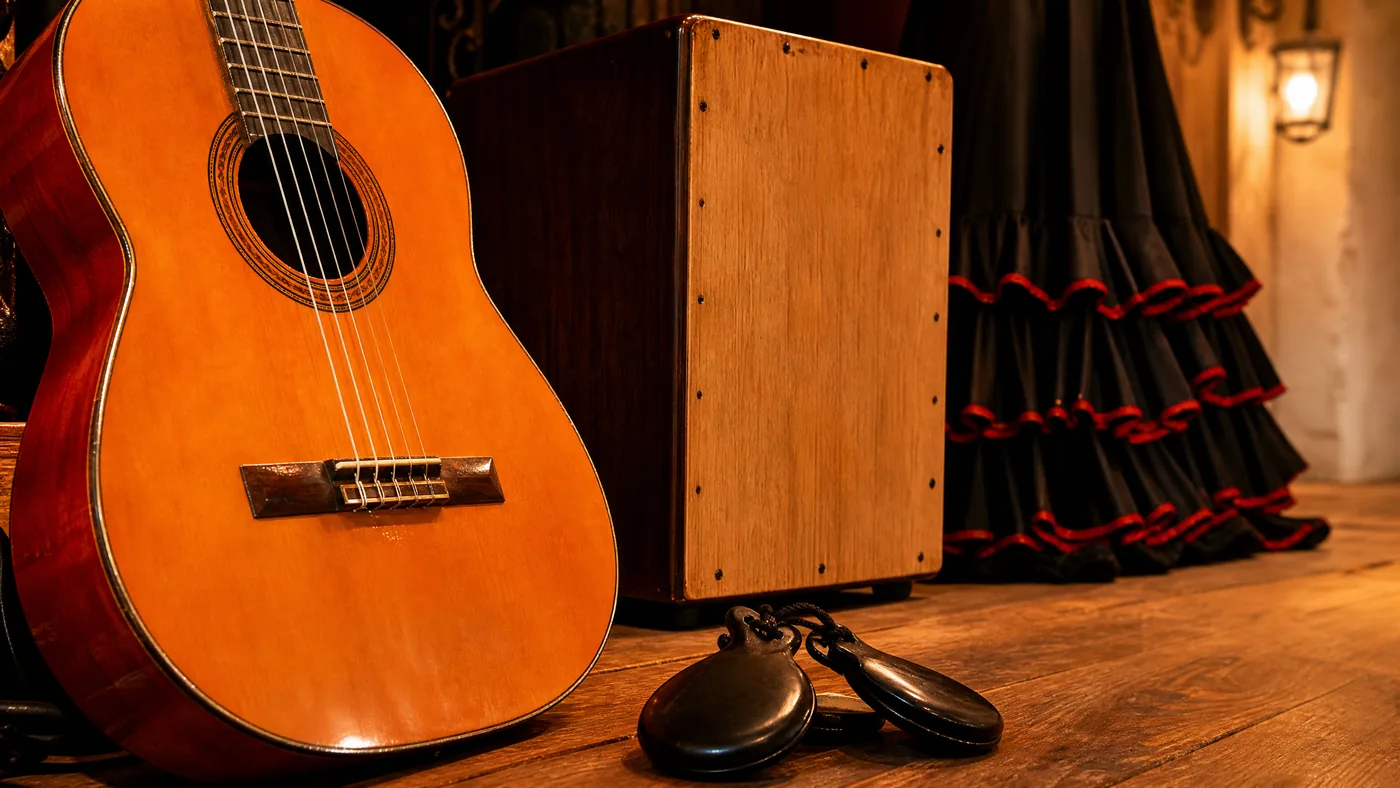
The guitar. UNESCO names toque, the guitar playing, as one of flamenco's three parts. The cajón, a box drum, joined later and is now a common sight on stage.
What each instrument does on stage:
- The flamenco guitar: close to a classical guitar, but built lighter, with a thinner top, lower action and less bracing, which gives a brighter, more percussive sound (Wikipedia). Cypress is the traditional wood for the back and sides, and a tap plate (golpeador) guards the top against the strikes of the fingers.
- The cajón: a Peruvian box drum. Wikipedia credits Paco de Lucía's sextet with introducing it to flamenco on Sólo quiero caminar (1981).
- Palmas and feet: UNESCO lists hand-clapping and foot-stamping as instruments in their own right. The dancer's shoes are part of the band.
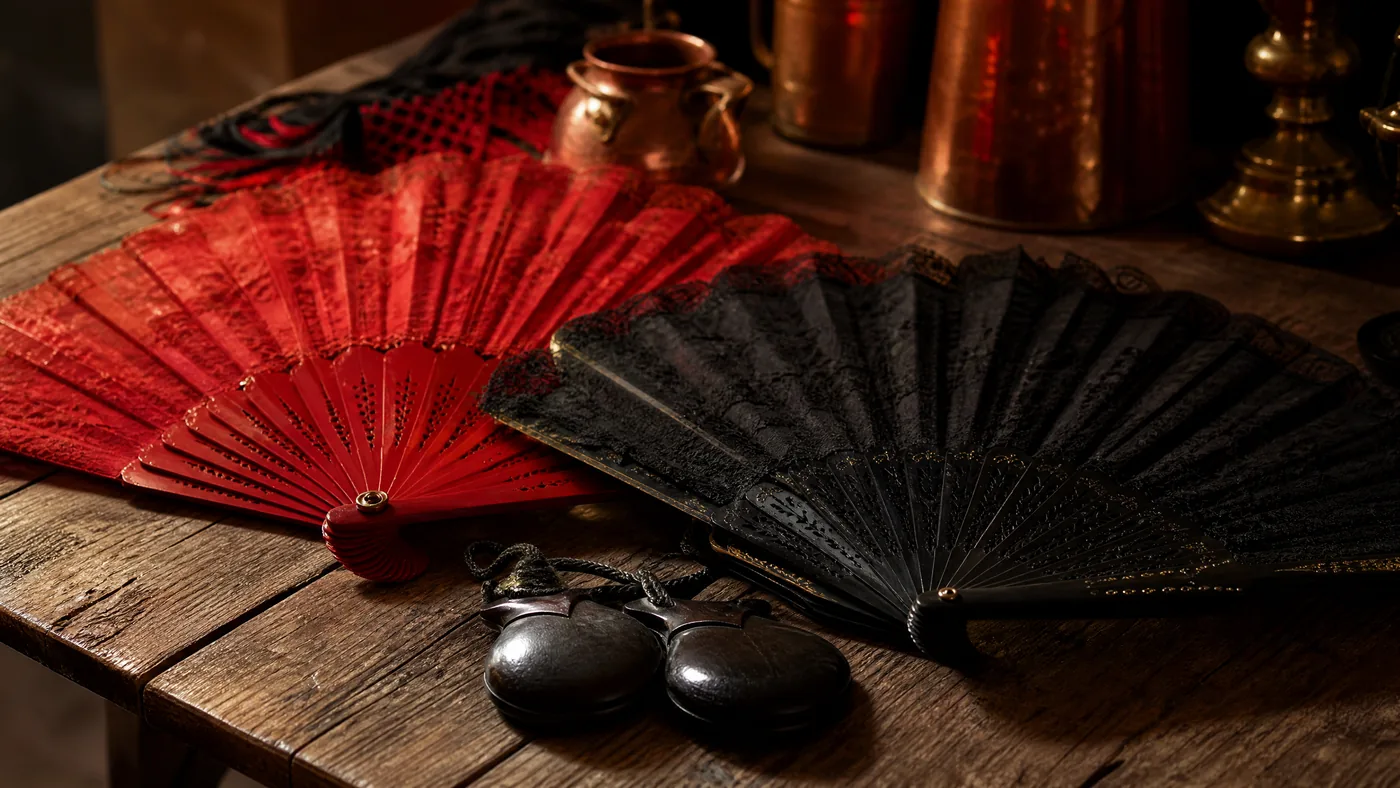
- Castanets: in UNESCO's list too, though Wikipedia notes they are not often used in the improvised style.
Some cantes need no instrument at all. Wikipedia calls them "a palo seco", sung without guitar.
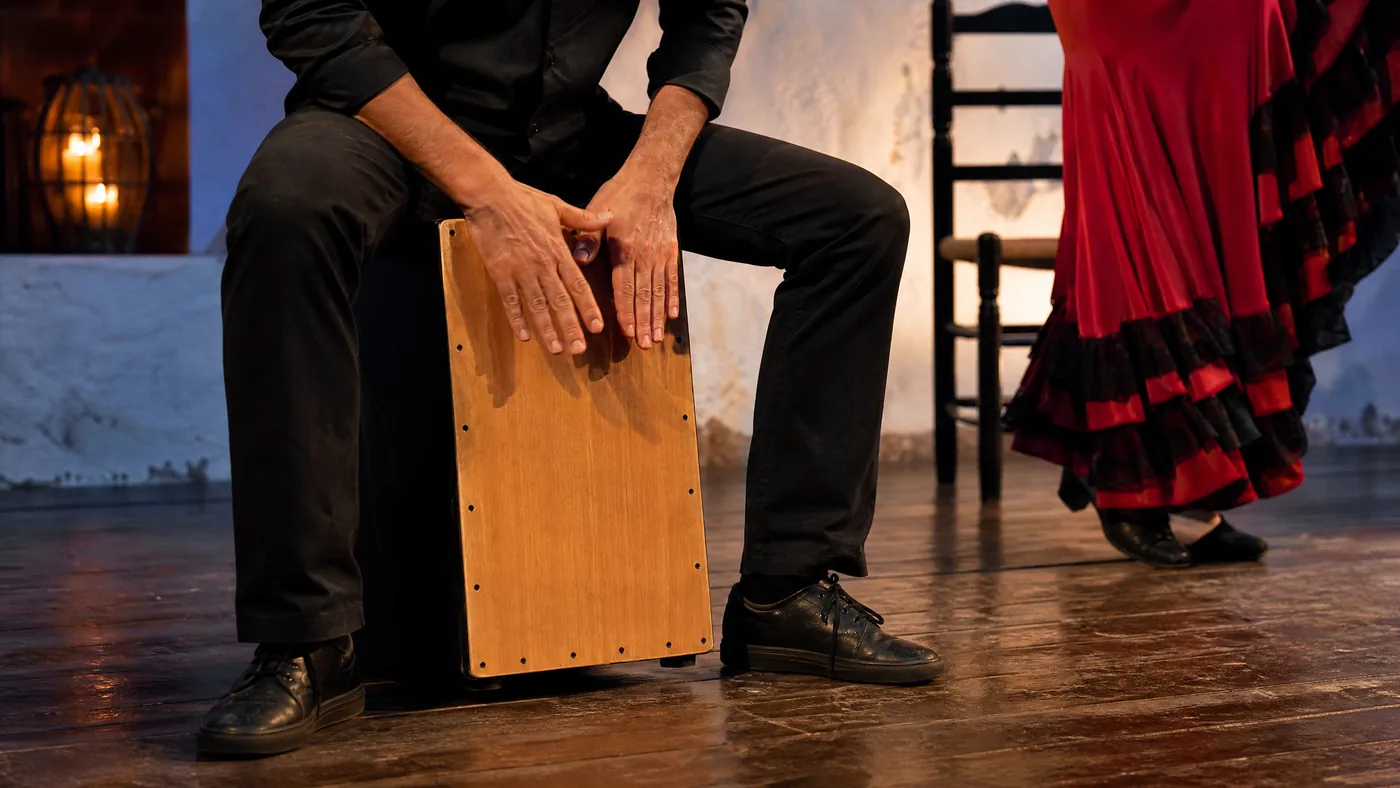
Who are the most famous flamenco singers and artists?
Camarón de la Isla is the name most often given for a singer, and Paco de Lucía for the guitar. Wikipedia says many consider Camarón the most popular and influential flamenco singer of the modern period.
A short list to start with, from the references:
- Camarón de la Isla (José Monje Cruz, San Fernando, Cádiz, 1950 to 1992): nine albums with Paco de Lucía between 1969 and 1977, then La leyenda del tiempo (1979) and records with the guitarist Tomatito. Andalusia's tourism board calls him a "legendary singer songwriter" with "a unique jondura and voice".
- Paco de Lucía (Algeciras, 1947 to 2014): "widely considered to be the world's premier flamenco guitarist", per Wikipedia. His rumba "Entre dos aguas" is arguably his best-known piece, which makes it a fair answer to "what is the most famous flamenco song?"
- Carmen Amaya (1918 to 1963): nicknamed La Capitana, and the first female flamenco dancer to master footwork previously reserved for the best male dancers, per Wikipedia.
- Lola Flores (Jerez de la Frontera, 1923 to 1995): popularly dubbed "la Faraona" (the Pharaoh).
- Enrique Morente: Granada's own great singer, whose path ran from orthodox tradition to creativity and heterodoxy, as Andalusia's tourism board describes it.
"Queen of flamenco" is not an official title. Two great women of flamenco carry famous nicknames: Carmen Amaya, La Capitana, and Lola Flores, la Faraona.
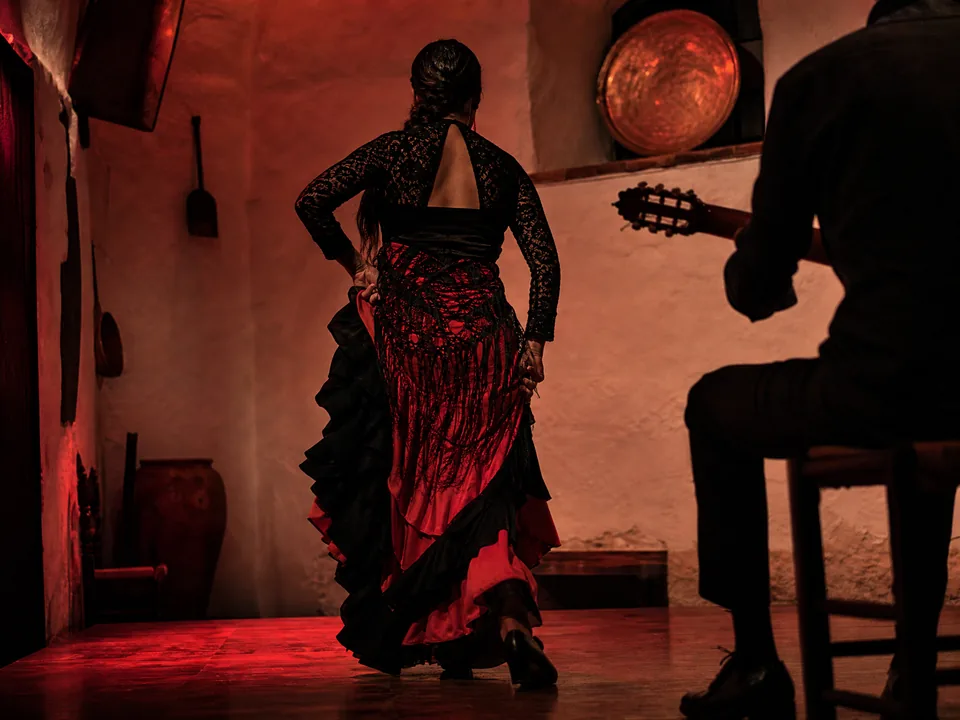
Granada's most booked show: four artists in a tablao by Plaza Nueva, with reserved seats and wine and Iberian tapas as an option.
Explore La Alboreá Tour detailsWhich country invented flamenco, and why is it controversial?
Spain, and Andalusia above all: UNESCO calls Andalusia the heartland of flamenco, with roots in Murcia and Extremadura. The debate is about where its sounds came from and who shaped it.
The main points, neutrally:
- The Gitano contribution: UNESCO says the Gitano (Roma) community played an essential role in its development. Wikipedia describes flamenco as closely associated with the gitanos, while its style is uniquely Andalusian and its artists have included Spaniards of both gitano and non-gitano heritage.
- The influences: Manuel de Falla argued in 1922 for three outside sources mixing with Spanish folk music: Byzantine church music, Moorish music and the music the Gitanos brought from India. Other writers weigh these differently.
- The name: as above, the word itself has three competing theories.
- Old criticism: the writers of the Generation of '98 attacked flamenco as frivolous and backward. The 1922 Concurso in Granada was organised partly as an answer.
- Official status: Andalusia's Statute of Autonomy gives the region exclusive competence over the knowledge, conservation, research, training, promotion and spread of flamenco "como elemento singular del patrimonio cultural andaluz" (as a singular element of Andalusian cultural heritage), as cited in the Junta de Andalucía's official bulletin (BOJA).
None of this changes what happens in the room. Granada adds its own chapter: the zambra of Sacromonte, the 1922 contest at the Alhambra and Lorca. Our Sacromonte caves guide picks up the story there, and Granada or Seville compares the two cities.
Frequently asked questions
What do you call a female flamenco dancer?
A bailaora (a male dancer is a bailaor). A female singer is a cantaora, and the guitarist is the tocaor.
What does olé mean in flamenco?
It's a call of encouragement, part of what flamenco calls jaleo, shouted when a passage of song or dance lands. Its origin is debated.
Who is the queen of flamenco?
There is no official title. Two great names with famous nicknames are Carmen Amaya, La Capitana, and Lola Flores, la Faraona.
When did UNESCO recognise flamenco?
In 2010, when it inscribed flamenco on its Representative List of the Intangible Cultural Heritage of Humanity.
Ready to book
Choose your show
Free cancellation up to 24 hours before on every option. Prices are from-prices in USD and move with the season.
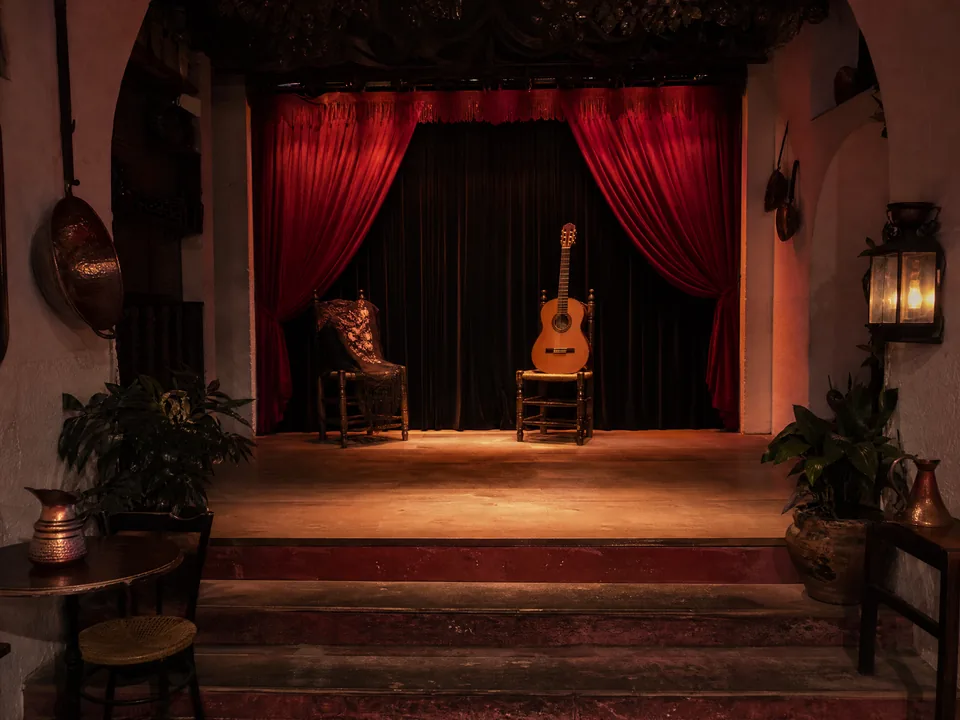
Flamenco Show at Jardines de Zoraya
Two dancers, two singers and a guitarist, by the San Nicolás viewpoint
Teatro Flamenco Granada
- 1-hour flamenco show
- Theatre seating
- 1 drink with General and Premium tickets
Flamenco Show at Tablao La Alboreá
- 1-hour flamenco show
- Reserved seating
- Wine and Iberian tapas (if option selected)